


औरत की बनाई, औरत के लिए
Started by a woman.Led by a woman.Made for every woman.
Jaipuri Banno was started by a woman and is led by a woman: Neetu Mahajan, a designer with over 16 years in the craft. From the printing table to the runway, every decision here is made by women, for women who know their own mind.
16+years of craftJaipurprinted by handWomenat the heart of it
हाथ की छपाई
The Craft of Hand Block Printing
Our prints begin as a design carved into wood and end as a pattern pressed by hand onto cloth. Here is how it's made, where it comes from, and why it's worth keeping alive.
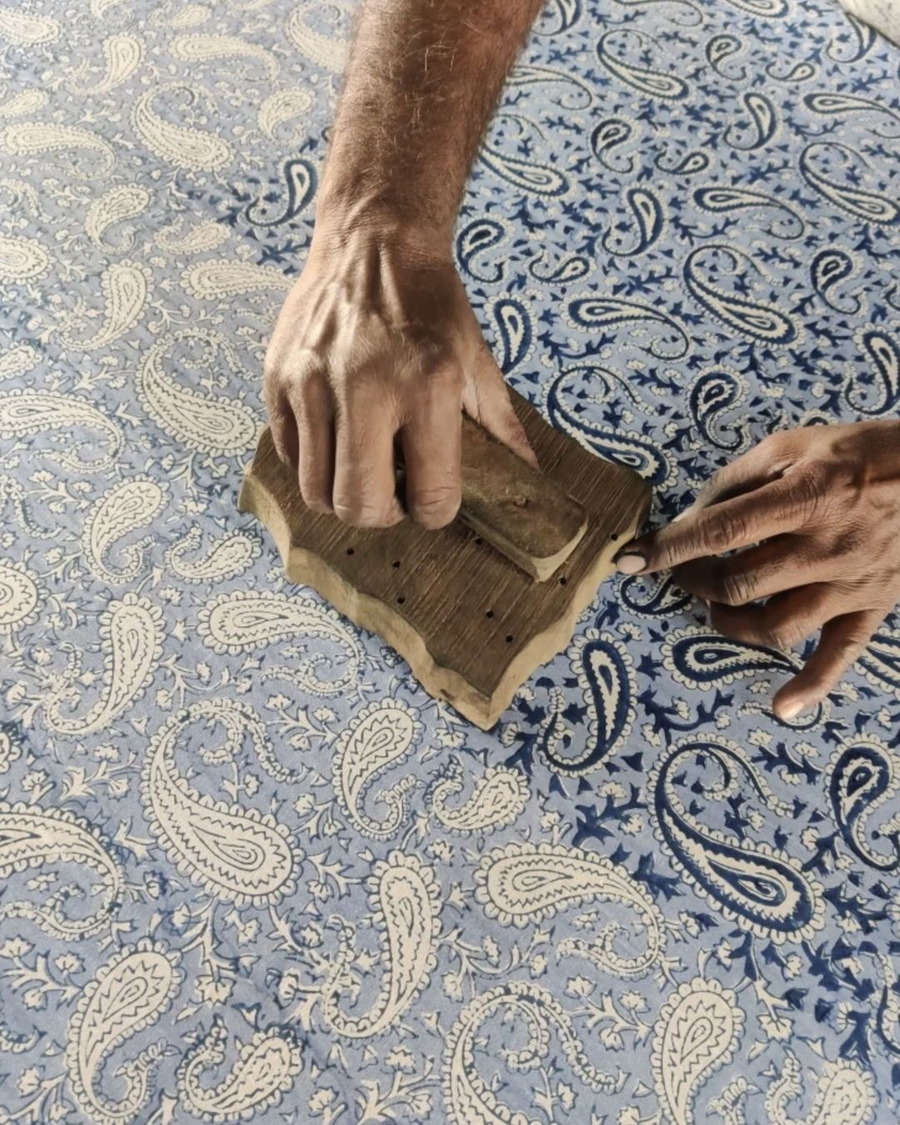
विरासत
A heritage that grew up around Jaipur
Hand block printing in this region goes back to the late 16th and early 17th centuries, when royal families supported the printers. Much of it is the work of the Chhipa community, whose name comes from the word for "to print." Printers who came from Gujarat settled in towns like Sanganer and Bagru, and each town grew its own style.
Both crafts are now protected with a Geographical Indication (GI) tag, which means only cloth printed in those places, in the traditional way, can carry their names.
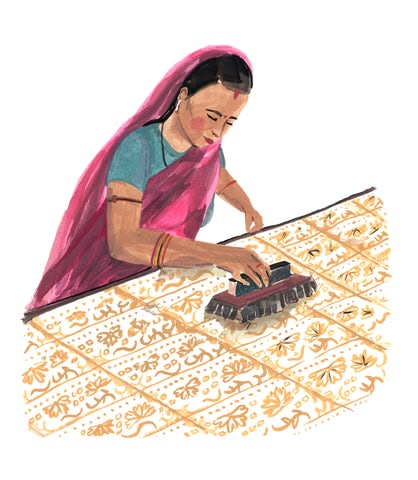
400+years of printing around Jaipur
1–12blocks used for a single design
2010GI tag for Sanganeri hand block printing
2011GI tag for Bagru hand block print
कैसे बनता है
How a block print is made
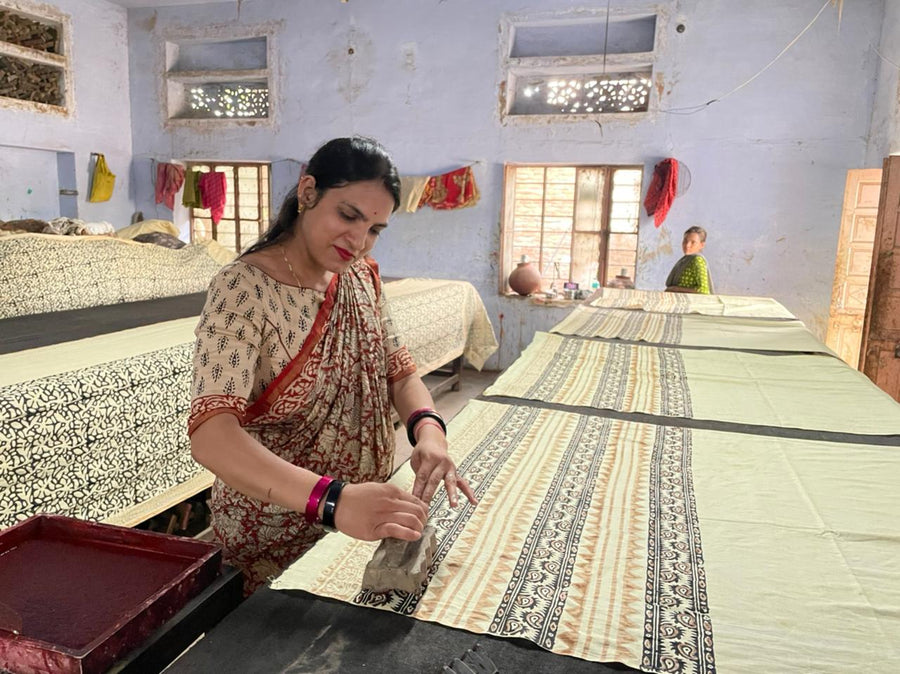
Every step is done by hand, and a single piece can pass through many pairs of hands.
- 1
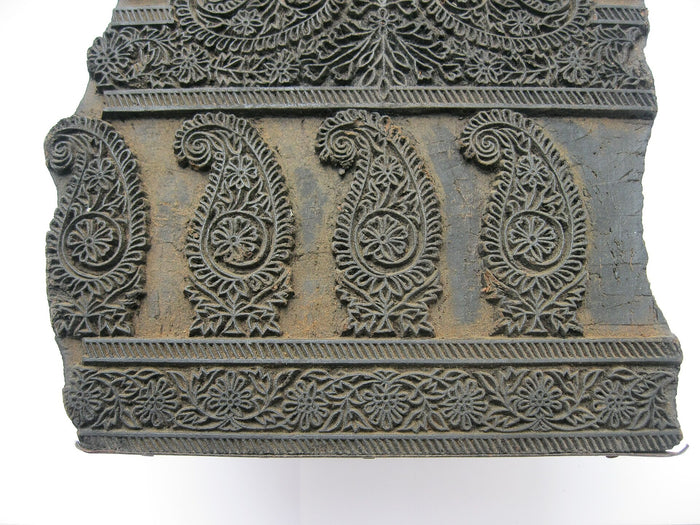
Carving the block
A carver cuts the design into a block of seasoned wood, usually teak, with small chisels and a hammer. The block is soaked in oil for days so it lasts.
- 2
Preparing the cloth
The fabric is washed, then treated so the colours take. In Bagru, cloth is soaked in harda, a natural mordant, and dried before printing.
- 3
Mixing the colour
Colours are mixed and spread in shallow trays. The printer dips the block lightly so it picks up an even coat.
- 4
Printing by hand
The cloth is stretched on a long padded table. The printer presses the block down, moves it along, and lines up each impression by eye.
- 5
Drying in the sun
Printed lengths are laid out in the open to dry. The sun helps fix the colour.
- 6
Washing and finishing
The cloth is washed to remove excess dye, dried again, and only then cut and stitched into a garment.
तीन ठप्पे
Three blocks, one print
Most designs are built in layers, each with its own carved block.
The outline block. Its name means "line." It prints the sharp edges of the design.

The background block. It colours the ground and leaves the motif blank for the other blocks to fill.
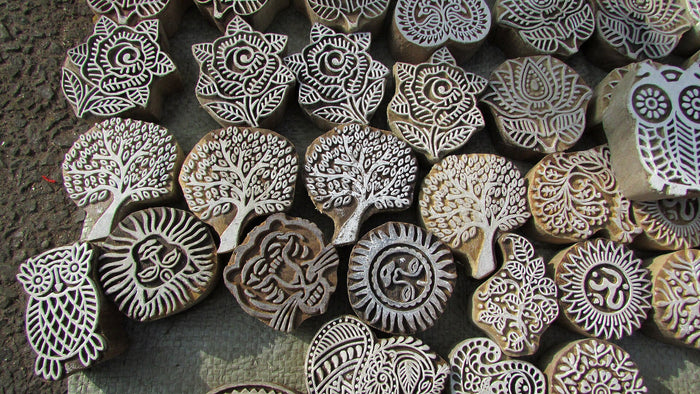
The filler block. It adds colour inside the outlines, one shade at a time.
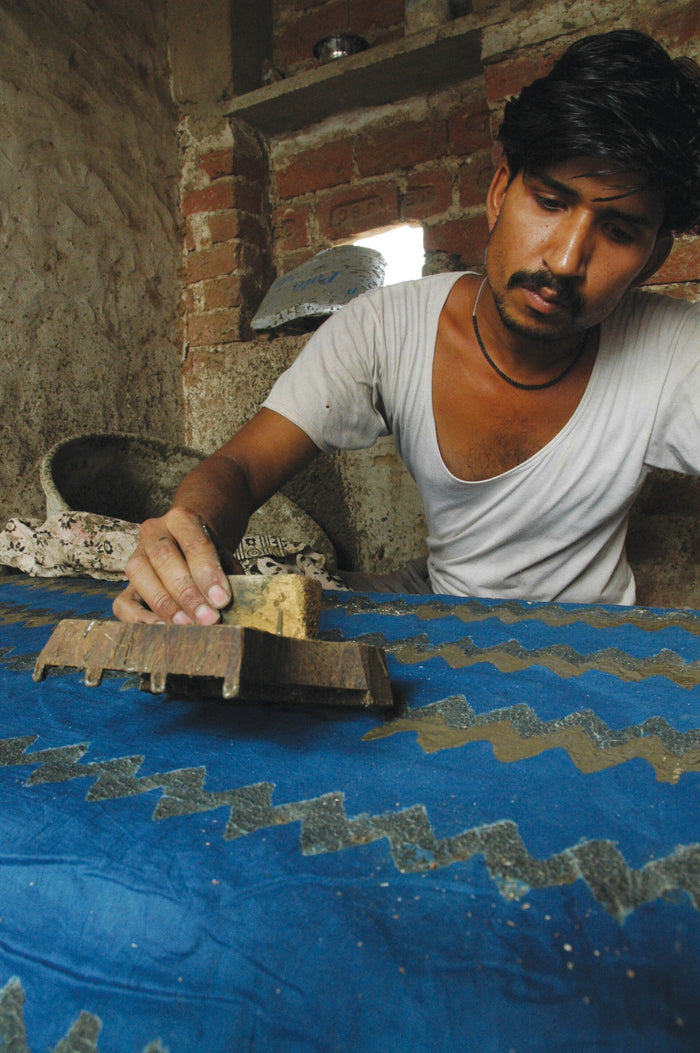
Laid together by hand, the layers never line up perfectly. That small shift gives the print its depth.
हर कपड़ा, एक स्तर
Every fabric, one standard
Block print is what we are known for, but it is only where we begin.
For over 16 years we have worked across fabrics of every kind, from everyday wear to festive. Each one is chosen by hand for how it falls, how it breathes and how it feels against the skin.
On that cloth, our printers, embroiderers and tailors bring the craft together: hand block print, fine embroidery and careful finishing. The result is a piece that feels premium, at a price that stays honest.
- Block printOur signature, printed by hand in Jaipur.
- EmbroideryHand and machine work that adds detail without weight.
- Every fabricLight or rich, plain or woven, picked for comfort and finish.
- 16 yearsOf choosing, printing and stitching, piece by piece.
दो गाँव, दो अंदाज़
Sanganer and Bagru
Two printing towns near Jaipur, two very different looks.
NEAR JAIPUR
Sanganer
- Fine florals: rose, lotus, marigold and sunflower
- Creepers with peacocks and parrots woven in
- Printed in fine detail on white or off-white cloth
ABOUT 32 KM FROM JAIPUR
Bagru
- Earthy natural dyes on cloth treated with harda
- Syahi-begar: a black outline with a red fill
- Dabu: a mud paste that resists dye to make patterns
नमूने
Motifs and what they're called
Block printers have names for every kind of pattern. These four are the ones you'll see most.
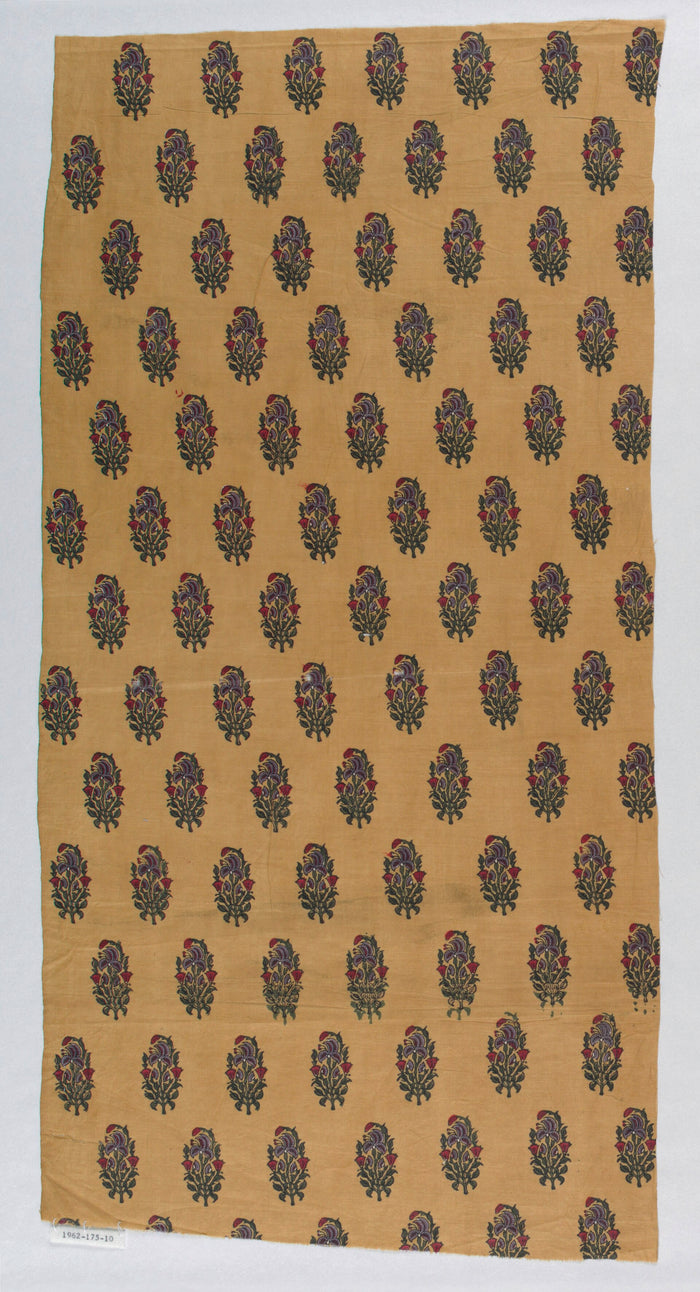
A large single motif, usually a flower, repeated with space around it.
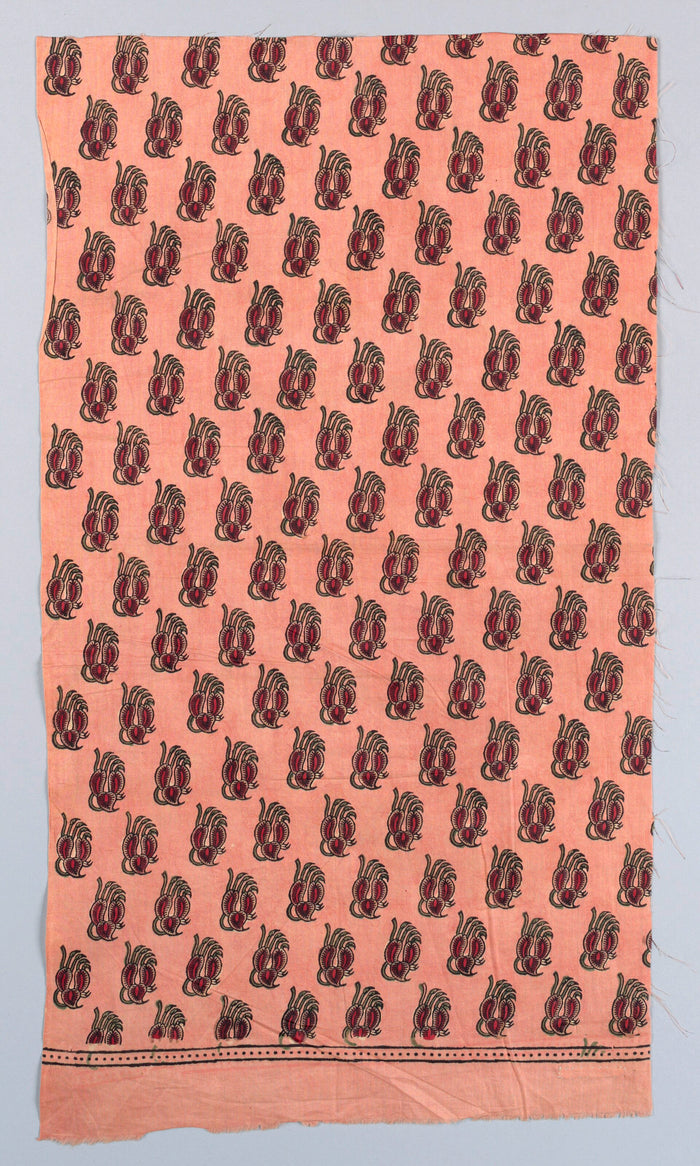
A small motif scattered all over. Light and easy to wear every day.
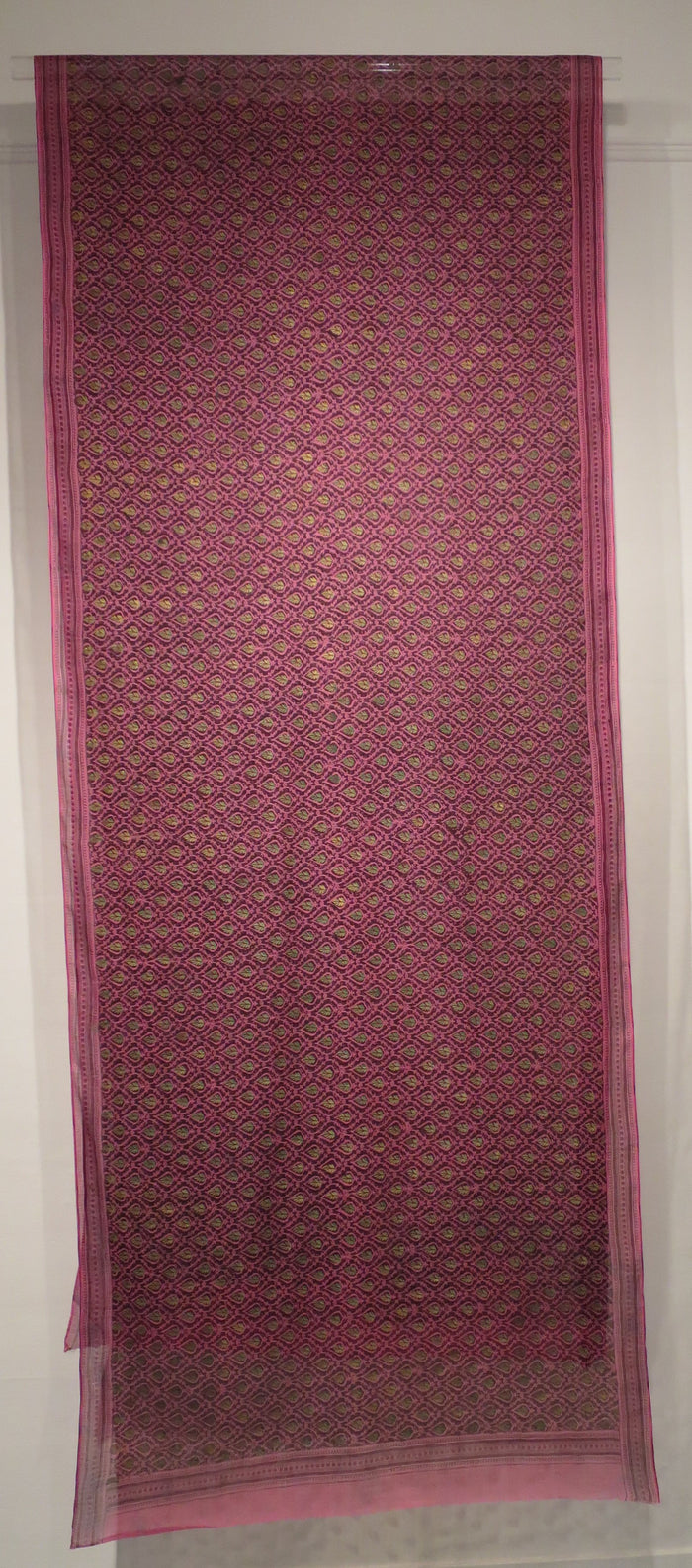
A net of flowers or lines that covers the whole cloth.
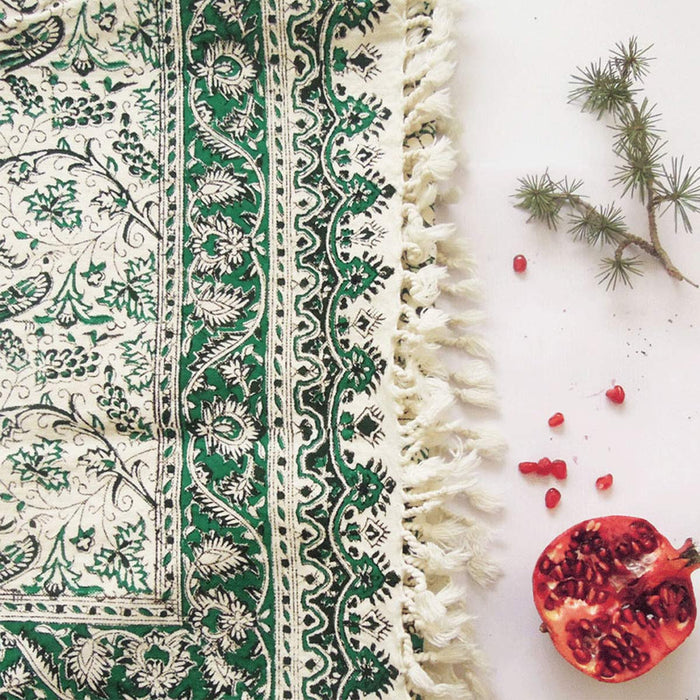
A climbing creeper, often printed along borders, hems and dupatta edges.
क्यों ज़रूरी है
Why the craft matters
The mark of a hand
Small gaps and overlaps between blocks give a hand print texture that a machine print can't copy. No two pieces are exactly alike.
A living skill
Carvers, dyers and printers pass this work down through families. Every hand-printed piece you buy keeps that work going.
Made slowly
Cloth is printed a block at a time and dried in the sun. Many printers still use natural dyes and mordants.
How to tell a real hand block print
- Look where the repeats meet. You'll see tiny gaps or overlaps.
- The outline and the colour sit slightly apart, not perfectly inside each other.
- Turn the fabric over. The colour soaks through to the back.
- Shades vary a little from piece to piece, even in the same print.

Ada-E-Hind · with the M3M Foundation
Times Lifestyle Week 2026
In May 2026 we presented Ada-E-Hind, a collection of 33 ensembles, at Times Lifestyle Week in Gurugram, co-presented with the M3M Foundation under the theme Threads of India: Woven Stories, Shared Soul. It was a big opening for us, and we made the most of it.
The M3M Foundation has been a big part of our journey, and we are grateful for their support.
Read about the showहुनर अपना
Women who make
A craft of your own can change a life. We want more women to have one.
We encourage young women who want to build something of their own. We help them learn embroidery, block printing and the skills behind every garment, so they can earn from their hands and grow with confidence.
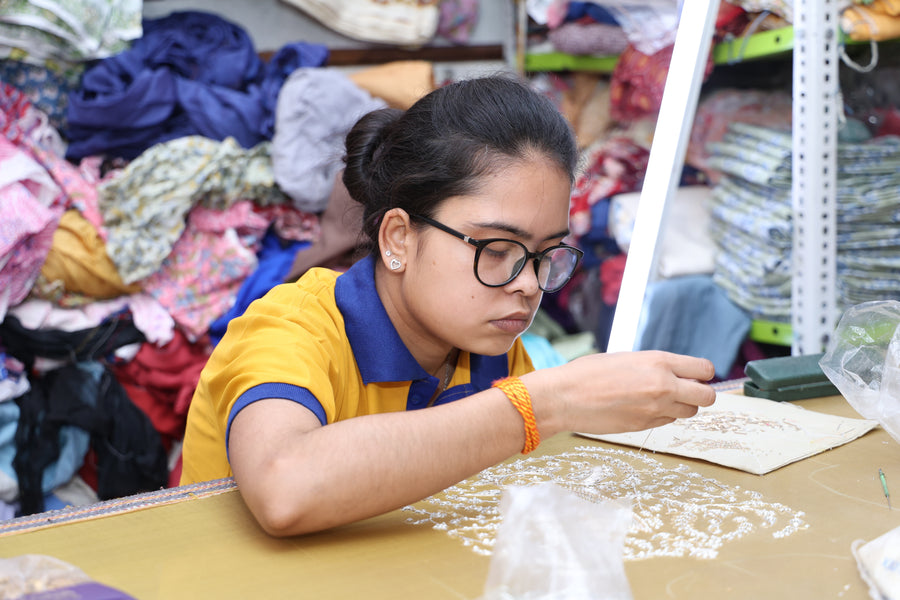
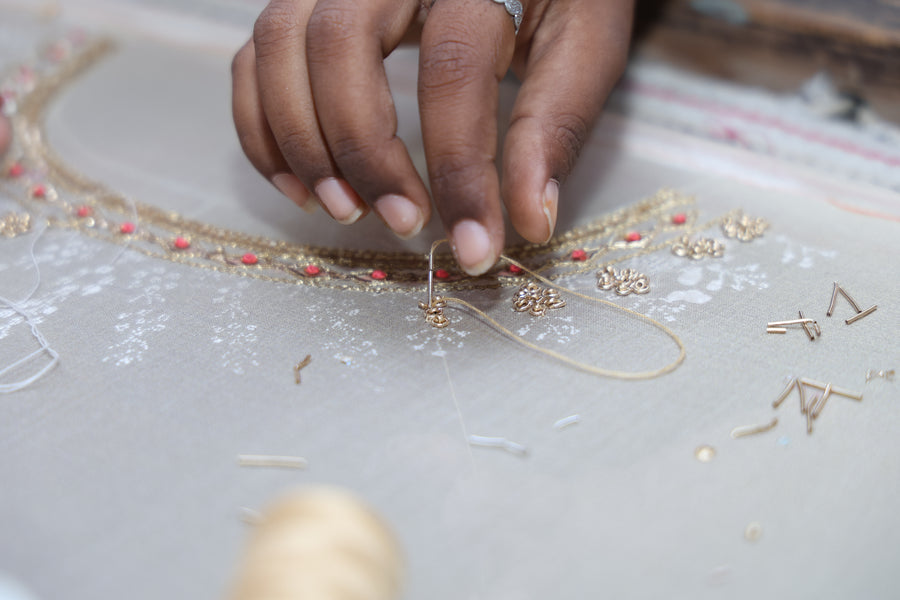

- LearnEmbroidery, block printing and finishing, taught by people who do it every day.
- MakeWork on real pieces, with guidance at every step.
- GrowBuild the confidence to start something of your own.
देखभाल
Caring for your block prints
A little care keeps the colours bright for years.
- Wash separately at firstHand-printed colours can run in the first few washes. Wash on their own in cold water.
- Use a mild detergentSkip bleach and strong soaps. Don't leave the garment soaking.
- Dry in the shadeTurn it inside out and dry away from harsh direct sun.
- Iron on the reverseUse a medium iron on the inside of the garment.
Wear the craft
Craft photos via Wikimedia Commons: Hubertl, Swapnil Karambelkar, Ketayun Katz and Sr3207 (CC BY-SA 4.0); Anildiggiwal and Honolulu Museum of Art (CC0); Cooper Hewitt, Smithsonian Design Museum (public domain).
हमारा फूल, ठप्पे से
Our flower, block by block
This is how the Jaipuri Banno flower would be printed by hand, one carved block at a time. Each block adds one layer, and the small shifts between them are the mark of a real hand print.
- 1Rekhरेख
The outline block is pressed first. Only the edges of the flower appear.
- 2Gadhगढ़
The background block colours the ground and leaves the flower bare.
- 3Dattaदत्ता
The first filler block adds the pink of the petals.
- 4Dattaदत्ता
A second filler block adds the green leaves. The flower is complete.
- Choosing a selection results in a full page refresh.